
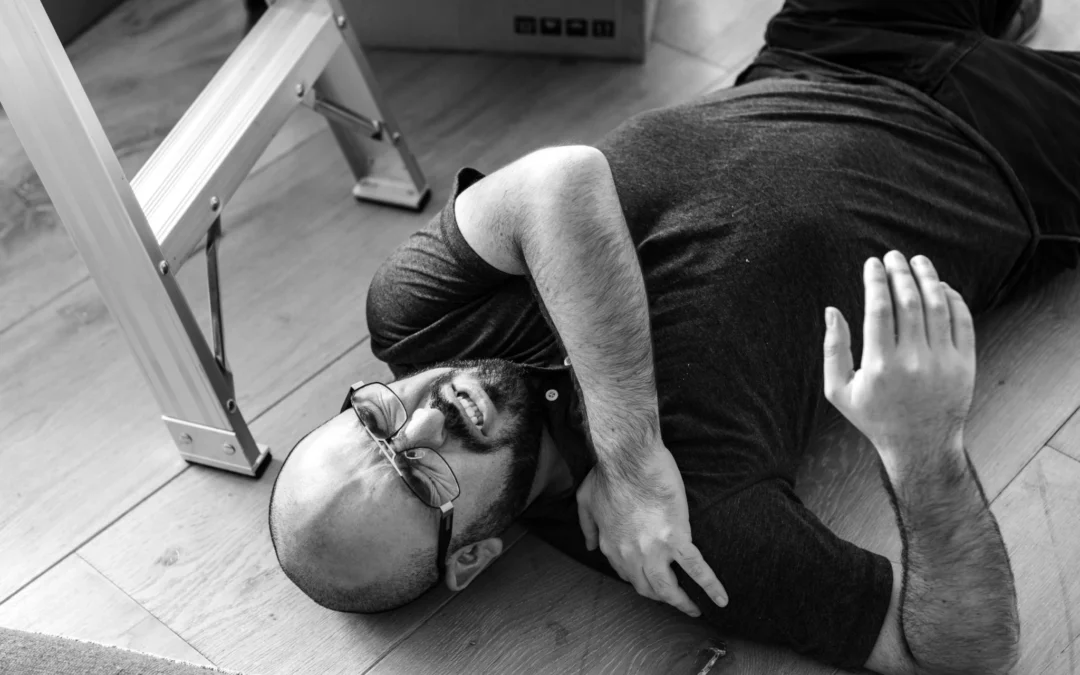
A slip and fall can happen in seconds—in a grocery store or in your apartment building hallway—but the choices you make afterward can affect your health, your case, and your financial future for years.
Here are 12 common slip and fall mistakes that quietly damage claims and make it harder for a slip and fall accident attorney to help you.
1. Not Getting Medical Care Right Away
One of the biggest slip and fall mistakes is trying to “shake it off” and go home.
Adrenaline and embarrassment can mask serious injuries like
- Concussions and brain injury
- Torn ligaments or tendons
- Spinal injuries and herniated discs
- Hairline fractures that worsen over time
Waiting days or weeks to see a doctor gives the insurance company an easy argument:
“If you were really hurt, you would have gone to the doctor right away.”
What to do instead:
- Go to urgent care or the ER the same day, or as soon as physically possible.
- Tell the doctor exactly what happened and where you feel pain.
- Follow all treatment recommendations and keep copies of your records.
If your symptoms worsen later, including headaches, dizziness, and memory issues, you may also need to speak with a firm that understands brain injury cases.
2. Failing to Report the Accident
If you don’t report your fall, it’s as if it never happened in the eyes of the property owner’s insurance company.
People often skip this step because they’re embarrassed, in a rush, or hope the pain will go away. Later, when they file a claim, there’s no incident report, no paper trail, and the business may deny everything.
What to do instead:
- Notify a manager, landlord, security, or staff member immediately.
- Ask to complete a written incident report.
- Request a copy or at least take a clear photo of it before you leave.
- Write down the full name and position of the person you spoke to.
This is crucial in premises liability and slip and fall cases; it documents that the accident actually occurred on their property.
3. Not Taking Photos and Video at the Scene
Conditions can change quickly:
- Spills get mopped
- Hazard signs appear after the fact
- Broken tiles or uneven flooring get replaced
- Lights get repaired
If you leave without photos, you may lose powerful evidence of what caused your fall
Take clear photos of:
- The exact spot where you fell
- Any liquid, debris, cables, or uneven surfaces
- Lighting conditions (dark stairwells, burned‑out bulbs)
- Missing handrails or broken steps
- Your visible injuries (bruising, swelling, cuts)
- Your clothing and shoes that day
A short video walking around the area can also help. These details can make a major difference when your personal injury lawyer in Glendale builds your case.
4. Trusting the Insurance Company to “Take Care of You”
Adjusters often sound friendly and reassuring on the phone. But their job is to:
- Minimize payouts
- Look for reasons to blame you
- Get you to say things that hurt your claim
Common tactics:
- Asking for a “quick recorded statement” before you’ve spoken to a lawyer
- Suggesting you don’t really need all the treatment your doctor recommended
- Offering a small settlement before you know the full extent of your injuries
What to do instead:
- Be polite, but do not give a detailed statement.
- Do not agree to a recorded call.
- Simply say you are still receiving medical care and are consulting an attorney.
Let a personal injury lawyer you can trust step in and handle communication for you.
5. Apologizing or Blaming Yourself”
Many people are raised to be overly polite: “I’m so clumsy,” “I should’ve watched where I was going,” or “Totally my fault.”
Those offhand comments can later be used against you.
California uses comparative negligence, which means:
- Your compensation can be reduced if they claim you were partly at fault.
- Casual apologies can be twisted into “admissions” of blame.
What to do instead:
A premises liability lawyer in California can sort out who’s actually responsible based on evidence, not on what you blurted out when you were in pain.
6. Ignoring “Invisible” Injuries
Slip and fall accidents often cause more than just bruises:
- Neck and back injuries
- Knee and shoulder damage
- Nerve pain and mobility issues
- Concussions and post‑concussive symptoms (fatigue, brain fog, mood changes)
These injuries can impact your ability to work, care for family, or run your beauty business, especially if you stand on your feet all day.
Red flags to watch for after a fall:
- Headaches or pressure in the head
- Dizziness or balance problems
- Memory issues or difficulty concentrating
- Numbness or tingling in arms or legs
- Persistent pain when walking, bending, or lifting
If symptoms continue, make sure your providers are documenting everything. For serious head trauma, a firm that focuses on protecting the rights of brain injury victims in California can be critical.
7. Posting About Your Fall on Social Media
From a lifestyle angle, it’s tempting to post a photo from the ER or make a quick TikTok about your “dramatic morning at Target.”
Insurance defense teams routinely search social media for:
- Photos or videos of you looking active after the accident
- Jokes or comments that downplay your pain
- Inconsistencies between what you say online and what you report in your claim
Even a cute brunch photo in Glendale, where you’re smiling, can be twisted into: “She’s fine. She’s not really injured.”
What to do instead:
- Avoid posting about the accident, your injuries, or your case.
- Ask friends and family not to tag you in physically active content.
- Keep your accounts private and be mindful of what you share.
Your slip & fall accidents team can give you guidance on what is and isn’t safe to post during your case.
8. Throwing Away or Washing Key Evidence
Your clothing and shoes from the day of the fall can become powerful evidence:
- The soles of your shoes can show they had adequate traction.
- Clothing can show blood, dirt, or damage from the fall.
- A torn sleeve or ripped pants can help corroborate how you fell.
Washing or tossing these items can weaken your claim.
What to do instead:
- Carefully place the clothes and shoes you wore in a bag.
- Do not wash or repair them.
- Store them in a safe place and label the bag with the date of the fall.
Share this with your slip and fall accident attorney early on so they can decide how best to preserve and use it.
9. Skipping Follow‑Up Appointments and Therapy
If you don’t follow through with medical treatment, the insurance company will say:
- “They must not be that hurt.”
- “They didn’t do what their doctor recommended.”
- “If they still have pain, it’s their fault.”
Life is busy. Work, kids, and responsibilities in Glendale or across Los Angeles can make it hard to get to physical therapy or specialists. But from a legal perspective, gaps in treatment are one of the most damaging slip and fall mistakes.
What to do instead:
- Be honest with your doctor about pain levels and limitations.
- Attend all recommended follow‑ups and therapy sessions.
- Keep a simple journal summarizing pain levels and what activities you struggle with.
This consistency supports your medical recovery and strengthens your case value.
10. Accepting a Fast Settlement Before You Know the Full Damage
Early settlements are almost always in the insurance company’s favor.
Why do they push you to settle quickly?
- Your long‑term symptoms aren’t clear yet.
- You may still need surgery, injections, or extended therapy.
- You may miss more work than expected.
- Once you sign, you can’t go back for more money, even if your condition worsens.
What to do instead:
- Do not sign any release or settlement agreement without legal advice.
- Talk with a slip and fall accident attorney about whether the offer covers:
- Current and future medical care
- Lost income and reduced earning capacity
- Pain, suffering, and lifestyle impact
A trustworthy personal injury lawyer you can trust will give you real guidance on whether to accept, negotiate, or walk away from an offer.
11. Handling a Serious Case Alone
Not every fall becomes a legal case, but when injuries are significant, trying to go it alone can cost you far more than an attorney’s fee.
Insurance companies have:
- Adjusters trained to minimize payouts
- Lawyers working behind the scenes
- Strategies designed to delay, deny, or underpay claims
You deserve someone on your side with equal experience, not just for slip & fall accidents, but also if your case overlaps with:
- Unsafe property and broader premises liability
- A defective product that caused your fall, requiring a product liability lawyer in Glendale
A fall that led to severe head or spinal trauma, similar to what’s seen in car accident or brain injury cases
What a boutique personal injury firm can do for you:
- Collect and preserve surveillance footage (before it’s erased)
- Work with medical experts and life‑care planners
- Calculate real case value, including future needs
- Handle all stressful communication so you can focus on healing
12. Waiting Too Long to Speak with an Attorney
Evidence doesn’t last forever:
- Surveillance video can be recorded for days or weeks.
- Witnesses forget details or change jobs.
- Hazardous conditions can be repaired without documentation.
California law also has strict deadlines (statutes of limitations) for injury claims. Waiting can mean:
- Losing access to key evidence
- Missing important notice requirements (especially with government or public property)
- Running out the clock on your right to file a claim
What to do instead:
- Reach out to a premises liability lawyer in California as soon as you’re stable.
- Even if you’re unsure whether you “have a case,” get guidance early.
- Bring whatever you have: photos, reports, medical records, and your own written timeline.
A brief consultation can clarify your options, your rights, and your next steps.
How a Glendale Personal Injury Lawyer Fits Into the Bigger Picture
Slip and fall injuries often overlap with other personal injury issues. A firm that handles a range of cases can spot angles others might miss.
For example:
- A fall in a parking lot might be connected to a car accident and poor lighting.
- A fall triggered by a collapsing chair or malfunctioning escalator might require a product liability lawyer in Glendale to pursue the manufacturer.
- If a loved one tragically passes away due to complications from a fall, a wrongful death lawyer in California may be needed to protect your family’s rights.
- If a dog knocked you down on a poorly maintained property, both dog bite and premises liability law may apply.
A firm like Elechyan & Co. Law, built around personalized attention and high‑touch communication, can coordinate all of these elements to protect you fully.
FAQs About Slip and Fall Mistakes in Glendale, CA
1. Do I really need a lawyer after a slip and fall if the store says they’ll file a claim?
Yes, you should still speak with a personal injury lawyer. The store’s “claim” goes to their insurance company, whose goal is to pay as little as possible. A lawyer protects your interests, not the business’s, and can tell you whether the offer is fair before you sign anything.
2. What if I were partly at fault for my slip and fall?
In California, you may still recover compensation even if you were partially to blame. The amount can be reduced by your percentage of fault, but it often isn’t as high as insurers claim. A premises liability lawyer in California can push back against exaggerated blame and highlight the property owner’s negligence.
3. How long do I have to file a slip and fall claim in California?
The deadline depends on who’s responsible and the facts of your case. Some claims, especially those involving government property, have much shorter notice deadlines. Because time limits are strict, it’s best to contact a slip and fall accident attorney as soon as possible to avoid losing your rights.
4. Can a slip and fall cause a brain injury even if I didn’t pass out?
Yes. You can sustain a concussion or more serious brain injury without losing consciousness. If you experience headaches, dizziness, nausea, sensitivity to light, or brain fog after a fall, seek medical care immediately and contact a firm that understands protecting the rights of brain injury victims in California.
5. What if my injuries got worse over time, and I already told the insurance I was “okay”?
This is common. Many people underestimate their injuries at first. Worsening pain, new symptoms, or later diagnoses (like torn ligaments or herniated discs) should be documented by your doctors. A personal injury lawyer you can trust can update the insurance company and push back if they try to use your early comments against you.
6. How much is my slip and fall case worth?
Case value depends on many factors:
- Severity and type of injuries
- Length and type of treatment
- Whether you’ll need future care
- Time off work and impact on your earning capacity
- How your injuries affect your daily life and activities
An experienced premises liability lawyer in California will review your medical records, bills, and long‑term needs before giving you a realistic range, not a generic number.
7. Do you only handle slip and fall cases?
No. At Elechyan & Co. Law, we represent clients across multiple personal injury areas, including slip & fall accidents, car accident injuries, dog bite cases, defective product claims handled by a product liability lawyer in Glendale, and support from a wrongful death lawyer in California when families lose a loved one due to negligence.
If you’ve been hurt in a slip and fall in Glendale or anywhere in California, you don’t have to navigate this alone or guess what your case is worth.
Elechyan & Co. offers the boutique, detail‑oriented representation you deserve, with clear communication and a team that treats you like family, not a file number.
Let’s talk. Your consultation is free.